After a collision or vehicle damage, choosing the right auto body shop can make the difference between a smooth repair experience and a stressful one. With countless shops out there promising top-notch service, how do you know which one is truly reliable? This complete guide will walk you through the essential steps to choosing a trustworthy, high-quality auto body shop that puts your vehicle—and your peace of mind—first.
1. Check Certifications and Credentials
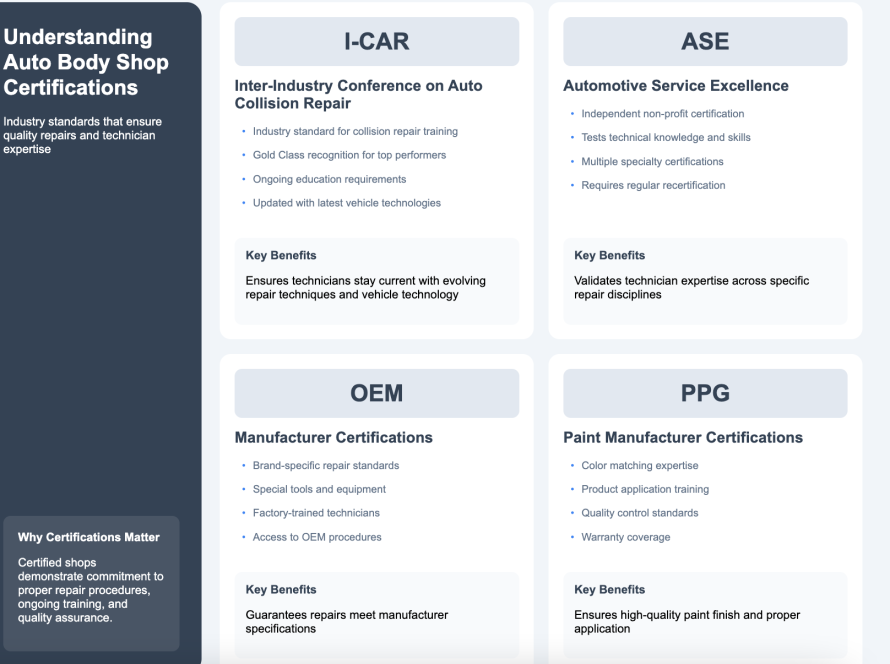
Start by looking for auto body shops that hold professional certifications. Reputable shops typically have:
- ASE (Automotive Service Excellence) certification
- I-CAR (Inter-Industry Conference on Auto Collision Repair) accreditation
- Licensing from local or state authorities
These certifications ensure technicians are trained, experienced, and up to date on the latest repair technologies. Learn more about what these credentials mean in our detailed guide to understanding auto body shop certifications.
2. Ask About Warranties
A quality shop stands behind its work. Always ask whether the shop provides a written warranty on repairs and parts. Most top-tier shops offer warranties that last from 12 months to a lifetime, depending on the service. A warranty gives you confidence that repairs are done right—and that the shop will fix any issues that arise. Read our complete breakdown of collision repair warranties and what should be covered.
3. Look for Positive Reviews and Reputation
Online reviews are a great way to gauge a shop’s reliability. Check platforms like Google, Yelp, or the Better Business Bureau to read real customer experiences. Watch out for:
- Repeated complaints about poor communication or missed deadlines
- Lack of follow-up service or unresolved issues
- Consistently low ratings over time
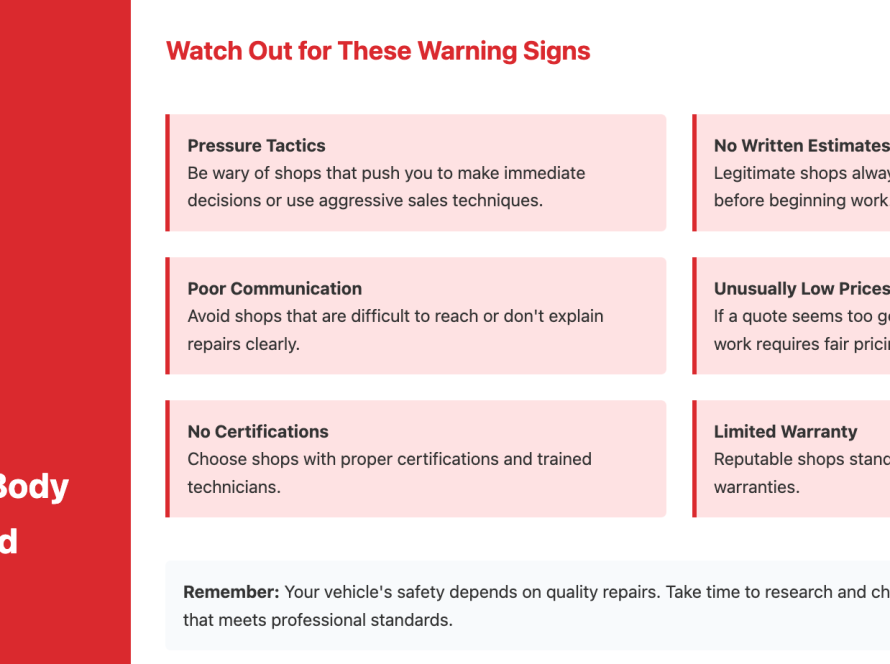
Also, ask around. Word-of-mouth referrals from friends, family, or your mechanic are often the most trustworthy. Know what warning signs to avoid by reading our guide on red flags: auto body shops to avoid.
4. Evaluate the Shop’s Communication
From the moment you make contact, a good body shop should communicate clearly and professionally. Ask yourself:
- Are they responsive to calls or emails?
- Do they explain the repair process in detail?
- Do they provide estimates and timelines in writing?
Avoid any shop that dodges questions or seems rushed or disinterested. Transparency is a sign of integrity. For a list of key questions, see our article on questions to ask before choosing a body shop.
5. Get Multiple Estimates
It’s always wise to get at least two to three estimates before committing. This allows you to compare pricing, assess professionalism, and avoid being overcharged. Be cautious of shops that offer a price far lower than others—they may be cutting corners with cheap parts or rushed labor. Understand what goes into pricing with our guide to collision repair cost factors and understanding your estimate.
6. Verify They Work with Your Insurance
If you’re filing an insurance claim, check whether the shop works directly with your provider. A Direct Repair Program (DRP) relationship can speed up the process and reduce paperwork. However, you are not obligated to use your insurance company’s recommended shop—you have the legal right to choose your own repair facility. Learn more about navigating the claims process in our guide to filing a collision insurance claim.
7. Inspect the Shop’s Cleanliness and Equipment
While a spotless facility isn’t required, a clean and organized workspace often reflects professionalism. Look for:
- Modern repair equipment and tools
- Secure parking or vehicle storage
- A welcoming and well-maintained front office
Shops that invest in their environment often put the same care into your vehicle.
8. Ask About Parts and Paint Quality
Find out whether the shop uses OEM (Original Equipment Manufacturer) parts or aftermarket components. OEM parts offer the best fit and function, though they may cost more. Also, ask about the paint-matching process—a quality shop should use advanced color-matching systems to ensure a flawless finish. For a detailed comparison, read our article on OEM vs. aftermarket parts and learn about paint matching technology.
9. Check for Repair Timelines and Rental Car Support
Ask for a realistic timeline for repairs. While exact completion dates may vary, a good shop will provide an estimated range and keep you informed. Some shops even offer on-site rental cars or loaner vehicles to help you stay mobile during the repair process. Understand what to expect with our guide on collision repair timelines and rental car coverage during repairs.
10. Trust Your Instincts
Finally, trust your gut. If a shop feels shady, lacks professionalism, or pressures you into decisions, walk away. A trustworthy auto body shop will treat you with respect, answer your questions clearly, and make you feel confident every step of the way.
Final Thoughts
Choosing the right auto body shop doesn’t have to be difficult. By doing a little research, asking the right questions, and trusting certified professionals, you can ensure your vehicle is in good hands. Remember—quality repairs aren’t just about appearance; they’re about safety, performance, and peace of mind.
❓ Frequently Asked Questions
What certifications should I look for in an auto body shop?
Look for I-CAR Gold Class certification (only 10% of shops have this), ASE-certified technicians, and manufacturer-specific certifications from brands like Tesla, BMW, Ford, or Honda. These certifications ensure technicians receive ongoing training on modern repair techniques and materials.
Should I get multiple estimates for collision repair?
Yes, always get 2-3 estimates before choosing a body shop. This helps you compare pricing, assess professionalism, and avoid being overcharged. Be cautious of estimates significantly lower than others—they may indicate the shop plans to use cheap aftermarket parts or cut corners.
Can my insurance company force me to use their preferred body shop?
No, you have the legal right to choose any repair facility regardless of what your insurance company recommends. While Direct Repair Program (DRP) shops may offer convenience, you’re not obligated to use them. Choose a shop based on quality and reputation, not insurance company preferences.
What warranty should a body shop offer on repairs?
Quality body shops should offer a written warranty of at least 12 months to lifetime coverage on repairs and paint work. Ask specifically what’s covered, whether parts are included, and if the warranty transfers if you sell the vehicle. Avoid shops unwilling to put warranty terms in writing.
How do I know if a body shop is using OEM or aftermarket parts?
Ask the shop directly and request it in writing on your estimate. OEM parts are manufactured by your vehicle’s maker and offer the best fit and quality. Aftermarket parts are cheaper but may have fitment issues. You have the right to request OEM parts, though insurance may only cover aftermarket pricing.