Filing a collision insurance claim can feel overwhelming, especially after the stress of an accident. Whether it’s a minor fender bender or a more serious collision, understanding the step-by-step process can help you stay calm, organized, and get your vehicle back on the road faster. Here’s everything you need to know to file a collision claim the right way.
1. Ensure Safety and Check for Injuries
Your safety comes first. Move your vehicle to a safe location if possible and check for injuries to yourself and others. If anyone is hurt, call emergency services immediately. Never leave the scene of an accident until it is appropriate to do so.
2. Call the Police (If Necessary)
For most collisions, especially those involving injuries, significant property damage, or disputes over fault, it’s important to call the police and file an official accident report. This report can be critical for your insurance claim and helps verify details.
3. Gather Essential Information
Collect as much evidence and information as possible at the scene. This includes the other driver’s name, contact information, insurance details, license plate number, and the make/model of their vehicle. Take photos of the damage, the surrounding area, any road signs or traffic lights, and any visible injuries. Also, document the time, date, and weather conditions.
4. Notify Your Insurance Company Promptly
Contact your insurer as soon as possible—ideally within 24 hours of the accident. Most providers offer 24/7 claim support by phone, mobile app, or online. Provide accurate information about the incident and be ready to supply the documentation and photos you’ve collected.
5. Provide a Detailed Statement
You’ll likely need to give a formal statement either over the phone or in writing. Be honest and detailed about what happened. Stick to the facts and avoid admitting fault unless you’re 100% certain. Your insurer will investigate and determine liability.
6. Work With a Claims Adjuster
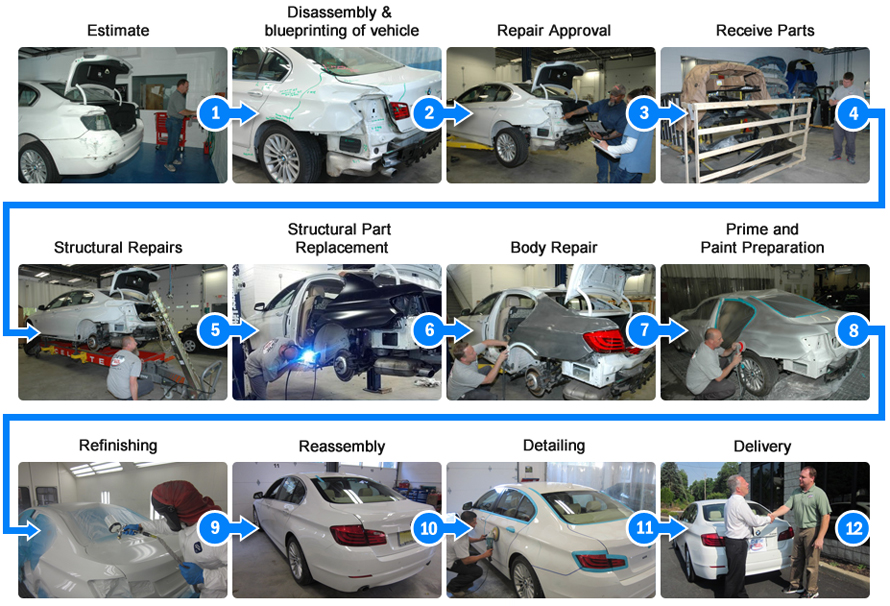
Your insurance company will assign a claims adjuster to review your case. They may contact you for further details, assess the damage to your vehicle (either virtually or in person), and provide an estimate for repairs. They may also help determine whether the car is repairable or considered a total loss.
7. Choose a Repair Shop
Depending on your policy and insurer, you may have the option to choose your own repair shop or select from a network of preferred providers. If you go with an approved partner, your claim may be processed more quickly and often comes with a warranty on the repairs.
8. Pay Your Deductible
Before your insurer pays out on the claim, you’ll be responsible for covering your deductible. This is the agreed-upon amount you pay out of pocket toward the repair costs. For example, if the damage is $3,000 and your deductible is $1,000, your insurance will cover $2,000.
9. Track the Repair and Settlement Process
Stay in communication with the repair shop and your insurer. Many insurance companies provide online portals or apps where you can track the progress of your claim and repairs. Keep copies of all estimates, receipts, and correspondence for your records.
10. Review the Final Settlement
Once the repairs are complete or the vehicle is declared a total loss, your insurer will issue the final payment. Make sure everything is accurate and matches the original estimates. If your vehicle is totaled and you still owe money on a loan, your payout may go directly to your lender.
Final Thoughts
Filing a collision insurance claim doesn’t have to be stressful when you understand the process. Acting quickly, staying organized, and keeping detailed records are key to a smooth experience. If you ever feel unsure or overwhelmed, don’t hesitate to reach out to your insurance agent or a trusted repair shop for guidance. Taking the right steps after an accident ensures you’re back on the road safely and with minimal hassle.