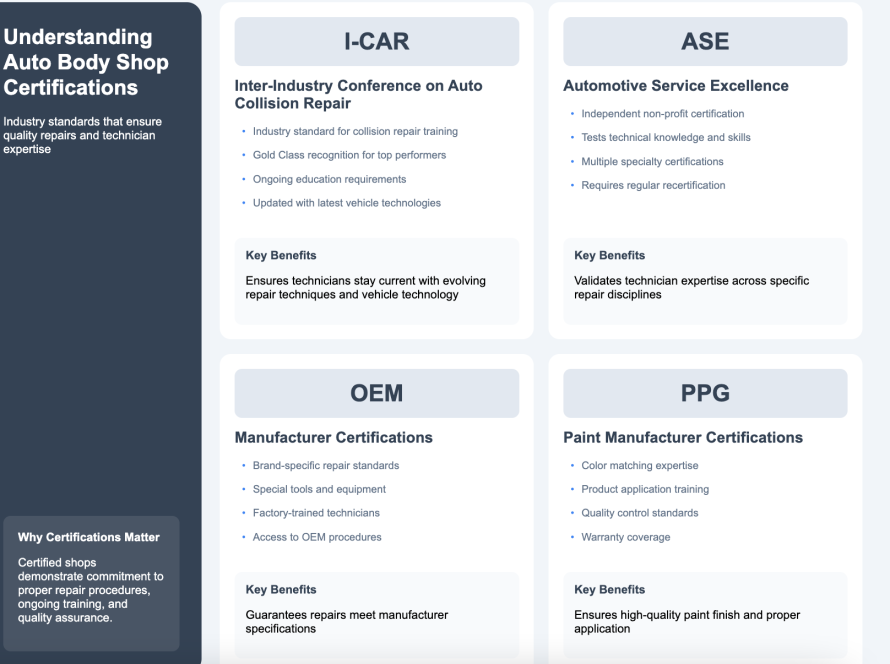
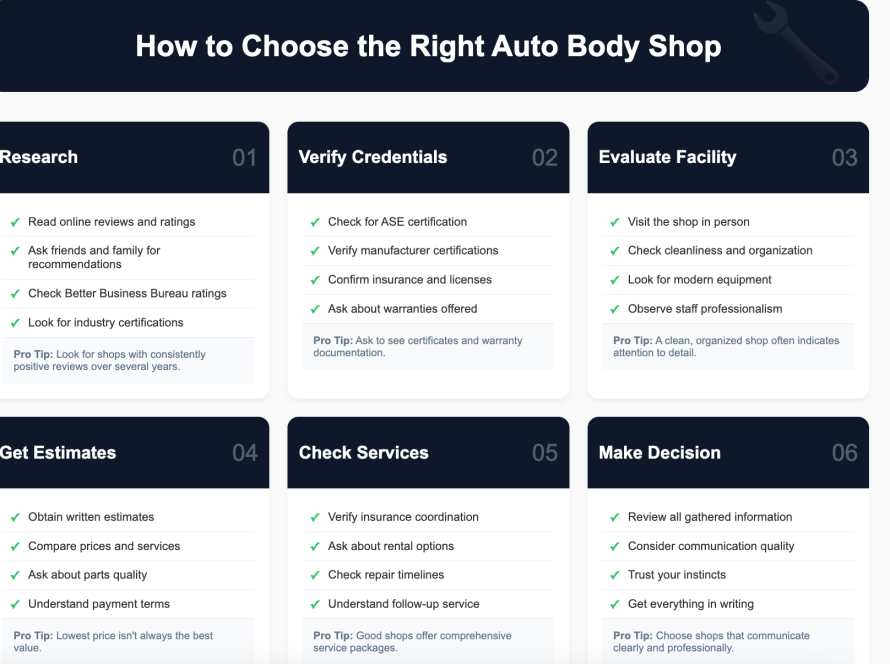
When you take your vehicle to an auto body shop after an accident, you’re not just paying for a repair—you’re investing in peace of mind. That’s why warranty coverage matters. A reliable warranty protects you from paying again for the same issue and shows that the shop stands behind its workmanship and materials. But not all warranties are created equal. In this post, we’ll explain what should be guaranteed, how warranties work, and what red flags to watch for.
What Is a Body Shop Warranty?
A body shop warranty is a written guarantee that covers defects in workmanship or materials after a repair has been completed. It ensures the customer won’t be responsible for costs due to errors or quality failures related to the repair job. Warranties can vary in terms of length, coverage, and transferability, depending on the shop and the type of repair.
Types of Coverage You Should Expect
| Warranty Coverage Area | What It Should Include |
|---|---|
| Labor & Workmanship | Guarantees proper installation of parts, repairs, painting, and refinishing |
| Parts (OEM or Aftermarket) | Covers any replacement part defects for a specified time (OEM often includes manufacturer warranty) |
| Paint & Refinish | Ensures the paint job won’t peel, bubble, or fade prematurely |
| Rust Protection | Coverage for rust-through on repaired or replaced panels (if applicable) |
| Frame & Structural Repairs | Assures proper alignment and structural integrity after a collision |
| Corrosion Warranty | Optional, depending on materials used, especially in high-humidity areas |
Typical Warranty Durations by Coverage Type
| Repair Type | Typical Warranty Length |
|---|---|
| Paint and Refinishing | Lifetime or 3–5 years |
| Parts (OEM) | Manufacturer’s limited warranty |
| Parts (Aftermarket) | 6 months to 2 years |
| Labor and Workmanship | Lifetime or limited lifetime |
| Rust and Corrosion (if offered) | 1–3 years or conditional |
Always ask whether the warranty is “lifetime” or “limited”. A lifetime warranty usually covers the customer as long as they own the vehicle. A limited warranty may only apply for a few years or may exclude certain conditions like weather exposure or owner modifications.
What Should Be in Writing
A legitimate body shop warranty should be provided in writing at the time of pick-up. It should include:
- Shop name, address, and contact info
- Vehicle details and repair description
- Specific items covered and duration of coverage
- Conditions or exclusions
- Claim process for defects or issues
If the shop only gives you a verbal promise or vague assurance, that’s a red flag. Always insist on documented proof of your warranty terms.
Important Questions to Ask About Warranties
- Is the warranty included in the repair, or is it extra?
- Does the warranty cover both labor and parts?
- Is it transferable if I sell the car?
- What steps do I need to take to maintain the warranty?
- How do I file a claim if there’s a problem later?
- Are there exclusions like normal wear, further collisions, or owner misuse?
What’s Not Typically Covered
Warranties usually do not cover:
- Normal wear and tear
- Damage from future collisions
- Owner neglect or misuse
- Environmental damage (tree sap, bird droppings, acid rain)
- Mechanical failure unrelated to the repair
Make sure you understand these exclusions so you don’t assume coverage that isn’t there.
Comparing Body Shop Warranty Policies
Here’s an example of how three shops might differ:
| Feature | Shop A | Shop B | Shop C |
|---|---|---|---|
| Labor & Workmanship | Lifetime | 2 Years | 6 Months |
| Paint & Refinish | Lifetime | 5 Years | 1 Year |
| OEM Parts Warranty | Manufacturer-backed | Manufacturer-backed | No OEM parts used |
| Aftermarket Parts Warranty | 1 Year | 6 Months | No Warranty |
| Written Warranty Provided? | Yes | Yes | No |
| Transferable to New Owner? | Yes | No | No |
Why Warranty Coverage Reflects Shop Quality
A strong warranty policy is a direct reflection of the shop’s confidence in its work. Shops that invest in skilled technicians, high-quality parts, and proper repair procedures are much more likely to offer comprehensive, long-term warranties. On the other hand, shops that avoid offering warranties may be cutting corners, using low-grade materials, or outsourcing important steps of the repair.
Final Thoughts
When choosing a body shop, the price of the repair is only one part of the equation. A solid warranty policy protects your investment and ensures the job is done right the first time. Always ask for warranty coverage details up front, compare different shops, and never assume you’re covered—get everything in writing. Your vehicle deserves repairs that last, and a warranty is your assurance that the shop will stand by its work.