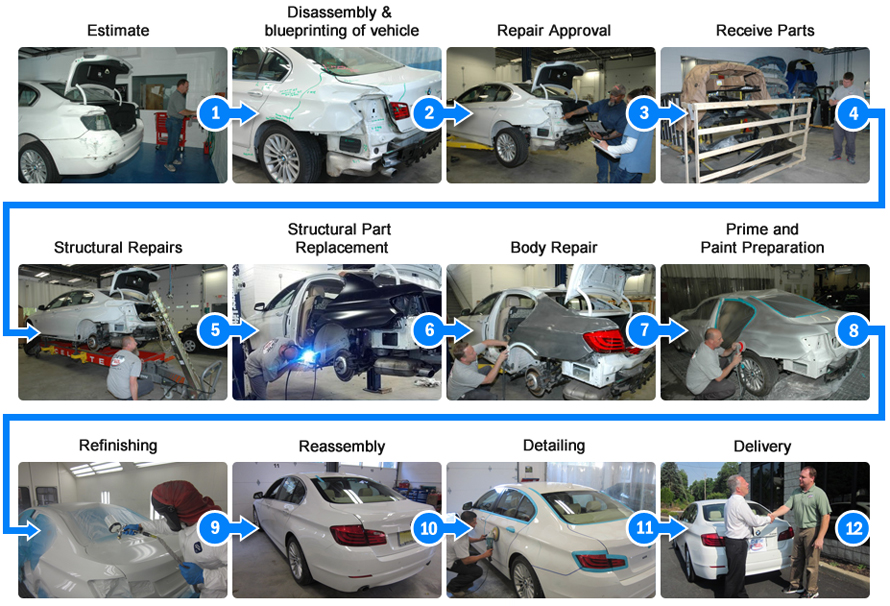
One of the most common questions after a car accident is, “How long will my car be in the shop?” While every collision repair case is unique, there are general timeframes you can expect based on the severity of the damage, availability of parts, and the body shop’s schedule. Understanding the stages of the repair process helps set realistic expectations and reduces stress during an already frustrating experience.
For minor cosmetic damage—such as small dents, paint scratches, or bumper scuffs—your vehicle could be repaired in 1 to 3 days. These types of repairs typically involve surface work, limited panel refinishing, and no need for disassembly or structural correction. If paint blending or sensor recalibration is needed, this could stretch the repair by another day or two.
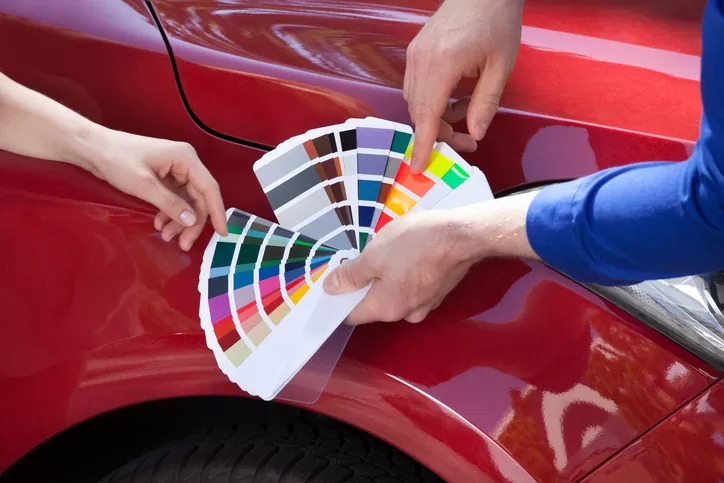
Moderate damage—including bent panels, cracked headlights, or alignment issues—usually requires 5 to 10 business days. During this time, your vehicle may go through several steps: disassembly, structural inspection, parts ordering, mechanical work, paint preparation, and refinishing. With any modern vehicle, extra attention is needed for matching OEM paint, recalibrating ADAS systems like lane departure warning and collision assist, and ensuring trim and electronics function correctly.
For major structural or frame damage, the process could take 2 to 4 weeks or longer. Extensive repairs involve ordering specialized OEM parts, conducting frame straightening, replacing crumple zones, and recalibrating all critical driving systems. BMW’s engineering precision means technicians must follow strict guidelines to maintain safety and performance. In some cases, if rare parts are backordered or if your X5 has custom paint or trim, delays may occur.
Here’s a rough breakdown of the timeline by damage severity:
| Damage Level | Estimated Repair Time |
|---|---|
| Minor Cosmetic Damage | 1 – 3 Days |
| Moderate Body Damage | 5 – 10 Business Days |
| Major Collision Damage | 2 – 4 Weeks or More |
Several other factors may affect how long your vehicle stays in the shop. Parts availability is a major one. While many repair centers keep common BMW parts in stock, specific items like sensor modules, headlight assemblies, or certain trim components may need to be ordered from Germany. Insurance approvals can also slow down the process, especially if supplement estimates are required after disassembly. Additionally, shop workload matters—reputable collision centers may have a queue due to high demand.
To speed things up, choose a manufacturer-certified repair shop that has direct access to manufacturer-approved parts and systems. These shops are trained specifically on your vehicle’s model and often work more efficiently due to their familiarity with BMW technologies. Many will also provide regular updates, including photos, repair status emails, or text alerts, so you’re not left in the dark.
Final Thoughts
While it’s natural to want your vehicle back quickly, quality should always take priority—especially with a sophisticated modern vehicle. Cutting corners on collision repairs may compromise safety, resale value, or long-term performance. At Dietrich’s Collision, we recommend working only with shops that specialize in BMWs and provide transparent repair timelines. With the right team on your side, your vehicle will return to you looking—and driving—like new.