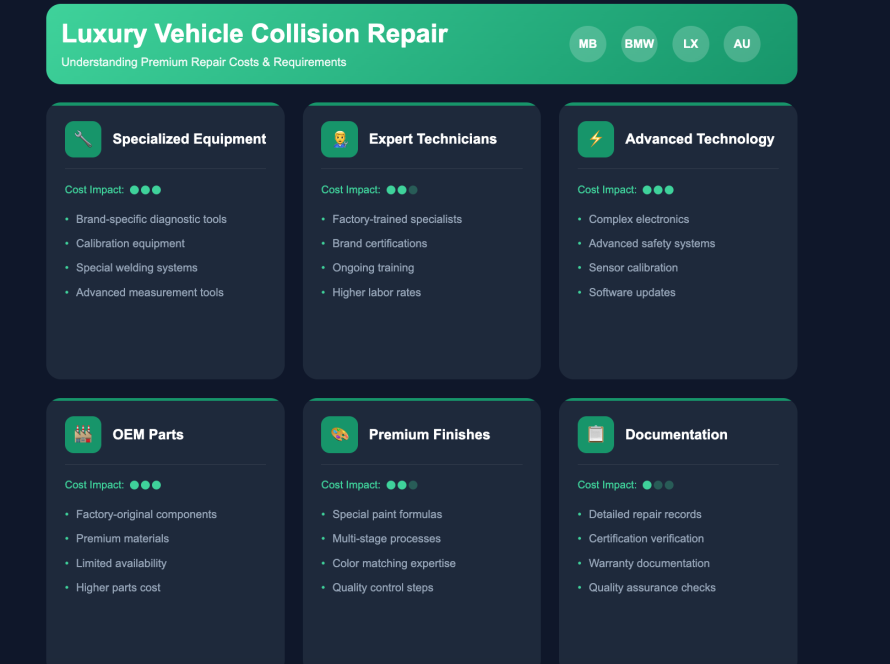
BMW is known for precision engineering, advanced performance, and innovative materials—and in recent years, that includes increased use of aluminum in vehicle body construction. Models like the BMW 5 Series, 7 Series, i Series, and X5 incorporate aluminum to reduce weight, improve fuel efficiency, and enhance handling. But with this innovation comes a new level of complexity in the collision repair process. Repairing aluminum-bodied BMWs isn’t the same as repairing steel. It requires special tools, certified technicians, and manufacturer-specific techniques. In this post, we’ll cover the most important considerations when dealing with BMW aluminum body repair and why choosing the right repair facility is essential.
Why BMW Uses Aluminum
Aluminum is roughly one-third the weight of steel and offers excellent strength-to-weight ratio. By using aluminum in hoods, doors, frames, and suspension components, BMW engineers can create vehicles that are both lighter and safer. Lighter vehicles accelerate faster, brake more efficiently, and consume less fuel—all without sacrificing safety. But while aluminum offers performance advantages, it’s also more delicate, difficult to work with, and requires a different repair philosophy.
Key Challenges in BMW Aluminum Body Repair
1. Special Tools and Equipment Are Mandatory
Repairing aluminum panels requires non-ferrous tools and a dedicated aluminum repair bay. Steel and aluminum cannot be worked on in the same area, as cross-contamination can lead to galvanic corrosion, weakening the panel structure over time. Certified BMW repair shops invest in specialized rivet guns, bonding agents, aluminum welders, and dust extraction systems to ensure the repair is both safe and OEM-compliant.
2. BMW Repair Protocols Must Be Followed Precisely
BMW provides strict guidelines on how aluminum panels should be removed, replaced, or repaired. These procedures include panel bonding, heat application, structural realignment, and post-repair recalibration. Any deviation from the process can compromise vehicle integrity, reduce safety in future impacts, or void the manufacturer’s warranty. Only BMW Certified Collision Repair Centers (CCRCs) have access to proprietary repair documentation and factory-approved techniques.
3. Trained and Certified Technicians Are Essential
BMW aluminum repairs are not DIY-friendly and not every body shop is qualified to handle them. BMW requires that certified repair shops employ I-CAR-trained or BMW-trained technicians who have completed courses on aluminum handling, joining methods, and diagnostic calibration. Technicians must also understand the differences between cast, extruded, and stamped aluminum, which all respond differently to force, heat, and pressure.
4. Limited Availability of Certified Shops
Because BMW aluminum repair is so specialized, only a select number of repair facilities are CCRC-certified to work on these models. These shops must maintain rigorous standards for tools, facility cleanliness, technician training, and repair documentation. Choosing a non-certified shop may result in improper bonding, subpar repairs, or compromised safety systems.
5. OEM Parts and High-Precision Paint Matching Required
BMW vehicles often feature unique color finishes and design-specific aluminum alloys. Replacing damaged panels with OEM BMW parts is essential to ensure proper fit, crash safety, and corrosion resistance. Likewise, BMW’s proprietary paint finishes require digital paint-matching systems and controlled booth environments to produce seamless, factory-level results.
BMW Aluminum vs Steel Body Repairs: Key Differences
| Repair Factor | Aluminum BMW Body Repair | Steel BMW Body Repair |
|---|---|---|
| Workability | More rigid, cracks under pressure | Malleable, easier to reshape |
| Contamination Risk | High (must avoid contact with steel dust) | Low |
| Tool Requirements | Specialized aluminum tools only | Standard auto body tools |
| Labor Skill Level | Requires BMW-certified or I-CAR-trained | Requires basic to advanced skills |
| Welding | Limited – bonding and riveting preferred | MIG or spot welding commonly used |
| Panel Replacement | Often required due to limited reshaping | May be repaired instead of replaced |
| Repair Cost | Higher due to materials and labor | Lower overall cost |
| OEM Repair Procedures | Strictly enforced by BMW | More flexibility in methods |
Questions to Ask Before BMW Aluminum Body Repair
- Is your shop part of the BMW Certified Collision Repair Center (CCRC) network?
- Do you have a dedicated aluminum repair area to prevent contamination?
- Will you use genuine BMW aluminum parts and adhesives?
- Are your technicians trained in BMW aluminum joining and repair techniques?
- How will you match BMW’s factory paint finish and texture?
- Do you provide a written warranty on aluminum repairs?
Risks of Choosing a Non-Certified Repair Shop
Using an uncertified or inexperienced shop can lead to:
- Galvanic corrosion due to improper tools or work areas
- Warranty voidance from unauthorized repairs
- Reduced crash protection due to faulty bonding or frame alignment
- Paint mismatch or uneven finishes
- Electrical system failure due to poor grounding with aluminum panels
- Increased long-term costs from rework or replacement of bad repairs
Final Thoughts
Repairing a BMW with aluminum body components is a precision process that requires special tools, factory training, and deep knowledge of BMW’s engineering philosophy. Aluminum’s benefits—lightweight design, safety, and performance—can only be preserved if the repair is done to exact standards. If your BMW has been involved in a collision, don’t trust it to just any shop. Choose a BMW Certified Collision Repair Center with a proven track record of aluminum repairs. It’s the only way to ensure your vehicle is restored to its original performance, appearance, and safety levels—exactly how BMW designed it.