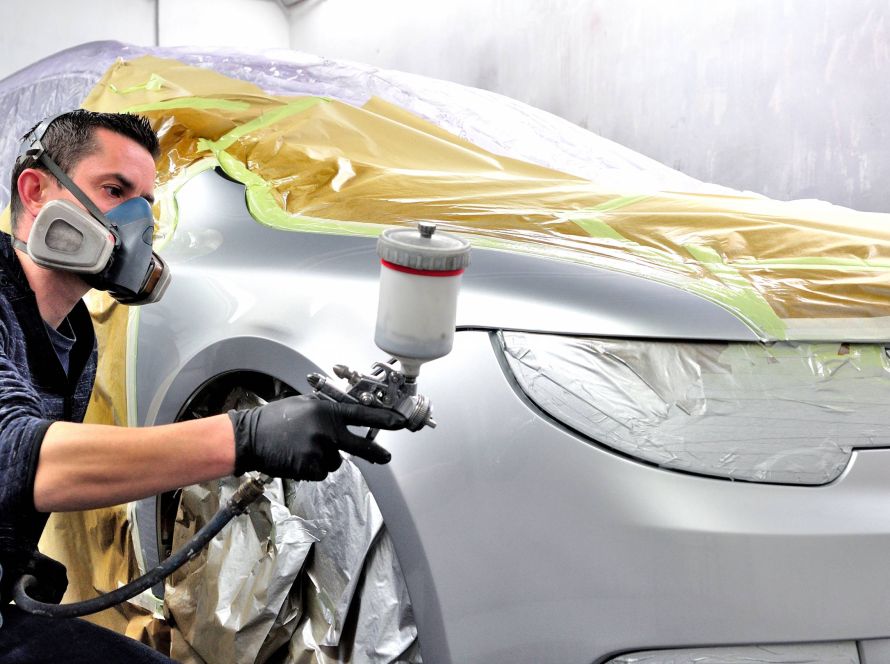
One of the most challenging and critical parts of any collision repair or vehicle restoration is paint matching. Whether you’ve had a small scratch, a repainted panel, or a full bumper replacement, nothing disrupts your BMW’s sleek look more than mismatched paint.
Modern vehicles like the BMW X5 come with complex, multi-layered factory paint finishes, and getting a perfect color match requires both science and skill. In this post, we’ll explore how professional repair shops achieve seamless paint matching and what factors influence the final result.
🧪 The Basics of Automotive Paint Formulation
All vehicles have a specific paint code, often located on a sticker inside the driver’s side door jamb or under the hood. This code refers to the base color, but not the full appearance — which includes layers like metallic flakes, pearl additives, and clear coat.
For example, BMW’s popular “Titanium Silver Metallic” (code 354) isn’t just a silver base. It involves:
- Metallic flake distribution
- Tinted clear coats
- Spray angles and light reflection variables
Shops use this code as a starting point — but real-world matching involves several refinements beyond the factory formula.
🎯 What Impacts a Perfect Paint Match?
Several factors can affect how well new paint blends with your existing finish. Here’s a comparison of what’s ideal vs. what causes mismatch:
| Factor | Ideal Conditions for Match | What Causes Mismatched Paint |
|---|---|---|
| Factory Paint Code | Accurate mixing and digital formula | Using only the base code without adjustments |
| Paint Aging/Exposure | Fresh paint blended into adjacent panels | Fading, oxidation, or UV damage on old paint |
| Metallic Flake Direction | Proper spray angle and gun technique | Improper flake orientation or inconsistent spraying |
| Temperature & Humidity | Climate-controlled booth and curing environment | Painting outdoors or in unregulated conditions |
| Panel Shape | Blending across curves and creases | Stopping the blend at edges or flat transitions |
| Human Technique | Experienced technician using feathering techniques | Rushing the job or poor prep work |
Paint match success comes from aligning optical reflection, not just color. Two panels may use the same paint but still look different due to lighting, angle, or surface shape.
🎨 How Shops Achieve a Seamless Match
Professional repair facilities rely on a blend of technology and expertise:
1. Digital Color Matching Systems
Shops use computerized spectrophotometers to scan your vehicle’s paint in its current condition. This includes accounting for fade, clear coat tint, and surface condition. The system recommends mixing adjustments that match reality — not just the factory formula.
2. Custom Tinting & Spray-Out Cards
Before spraying your car, technicians mix a small batch and apply it to a test card. This is then dried and compared next to your actual vehicle under different lighting to confirm a match.
3. Panel Blending Techniques
Even with a perfect mix, paint is blended across adjacent panels (like fenders or doors) to “fade” the new color into the old. This ensures there’s no visible line where old meets new — the eye perceives a continuous surface.
4. Clear Coat Application
The final clear coat enhances shine, protects the paint, and unifies the appearance. In some cases, a tinted clear coat is used to adjust depth or tone.
🧠 Why You Should Avoid DIY Paint Matching
While it’s tempting to touch up paint at home, most DIY solutions fall short on:
- Spray technique (inconsistent flake layout)
- Matching the level of gloss
- Blending without hard lines
Even with factory touch-up paint, differences in aging, angle, and spray delivery mean your repair may stand out — especially in sunlight or at certain angles.
🛠 Does Paint Matching Work on All Colors?
Some colors are harder to match than others. Here’s a general guide:
- Easy to Match: Solid whites, blacks, non-metallic colors
- Moderate: Basic metallic silvers and grays
- Hard to Match: Pearlescent finishes, tri-coat colors, candy paints, color-shifting or deep metallics
BMW’s Carbon Black Metallic, for example, may look black in low light but blue in sunlight — requiring precise matching and skilled blending.
🧾 Questions to Ask Your Body Shop
- Will you scan my vehicle for an exact color match?
- Do you blend adjacent panels or just repaint the damaged one?
- Is your paint booth climate-controlled?
- Do you offer a color match warranty?
Reputable shops won’t hesitate to explain their paint process or show you spray-out cards before they begin.
🧠 Final Thoughts
Paint matching is more than picking the right code — it’s an art backed by science. For BMW X5 owners and anyone who values their vehicle’s aesthetics, choosing a qualified shop with proper equipment and skilled painters is essential for flawless results.
Don’t settle for “close enough” when it comes to your car’s finish. With the right tools, techniques, and attention to detail, a high-quality paint match can make your vehicle look as if the damage never happened.
Want more BMW X5 repair tips and bodywork insights? Explore more guides on x5world.net, where real owners and experts share practical advice you can trust.